Posts

Open Homes...

Of all the press we have done (which is a fair bit at this point)... this was our fist foray into commercial television. James and the folks at North Light Productions were nice people to deal with, but it was a very differnet beast than working with ABC TV. In case you didn't guess Bondor was the sponsor for the segment on our house. The Passive House aspect didn't really get much coverage, but I do feel like I've said this stuff enough that it is coming out fairly well! Open Homes Australia, season 6, episode 7. YouTube: Open Homes Australia, season 6, episode 7.
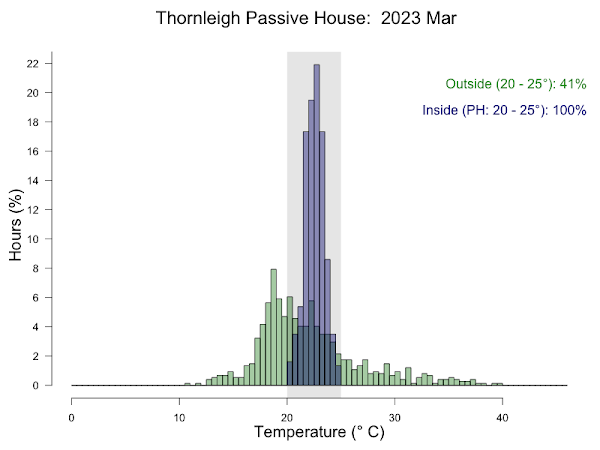
2023 March

Image
Inside we were between 20 & 25 °C 100% of the month and we produced as much energy as we used (50% direct usage and the other 50% was exported and imported). March started with summer weather but ended in fall weather... it was definitely summer (median temperature 21 °C). The split system was on during peak solar generation for most of the first half of ther month. The HRV was solidly in the 'cooling' season. Outside temperatures ranged from 11 to 40 °C, while inside we were a comfortable 20.0 to 24.8 °C. We had a few rainly days and a couple of very cloudy weeks. Temperature from inside and outside the house as the percentage of hours in 0.5 °C bins. I've scaled the temperature in hope that I will be able to use the temperature range for all months. Methods: I have taken the 5 minutely data from the wirelessTag sensors and calculated the median temperature for each hour and determined the proportion of hours falling inside of the 20 - 25 °C target temperature ...

2023 February

Image
February had some decently hot weather.. it was definitely summer (median temperature 21 °C). The split system was on during peak solar generation for most of the month and overnight when the temperature did not drop below 20 °C overnight. The HRV was solidly in the 'cooling' season. Outside temperatures ranged from 14 to 38 °C, while inside we were a comfortable 19.6 to 25.5 °C. We had a few rainly days, but it has been mostly sunny. Temperature from inside and outside the house as the percentage of hours in 0.5 °C bins. I've scaled the temperature in hope that I will be able to use the temperature range for all months. Methods: I have taken the 5 minutely data from the wirelessTag sensors and calculated the median temperature for each hour and determined the proportion of hours falling inside of the 20 - 25 °C target temperature (using the R functions 'aggregate' and 'hist'). Inside includes data from the wirelessTag sensors spread across nearly eve...

2023 January

Image
January was not been wickedy hot, but it was definitely summer (median temperature 21 °C). The split system was on during peak solar generation for most of the month and overnight when the temperature did not drop below 20 °C overnight. The HRV was solidly in the 'cooling' season. Outside temperatures ranged from 12 to 33 °C, while inside we were a comfortable 19.7 to 25.6 °C. We had a few rainly days, but it has been mostly sunny. Temperature from inside and outside the house as the percentage of hours in 0.5 °C bins. I've scaled the temperature in hope that I will be able to use the temperature range for all months. Methods: I have taken the 5 minutely data from the wirelessTag sensors and calculated the median temperature for each hour and determined the proportion of hours falling inside of the 20 - 25 °C target temperature (using the R functions 'aggregate' and 'hist'). Inside includes data from the wirelessTag sensors spread across nearly every ...

Bees...

Image
Australia has endemic stingless bees... and now we have some in our yard.  Tetragonula carbonaria are not the European Honey Bees that most people know... they are much smaller and don't have stingers. In the Sydney region, T. carbonaria is at the southern end of its range as they only forage for food at temperatures above 18 °C. Keen observers of this blog will know that for a reasonable period of the year we experience outdoor temperatures below 18 °C. They also do not like temperatures above 38 °C. Outdoor temperature from August 2018 through the end of 2022. You can see that we had a few days in January 2020 that would have been too hot for the bees.  Outdoor temperature from August 2018 through December 2022. The green zone (18 - 38 °C) are temperatures at which the bees will forage. They will have very high mortality at temperatures below 0 °C or above 42 °C. Bees returning to the hive after visiting flowers... The entry to the hive box is through a ...

2022 December + calendar year 2022

Image
December was relatively mild and comfortable (median temperature °C). We decided to run an experiment in the last half of the month using A/C and no nighttime ventilation. Outside temperatures ranged from 10 to 35 °C, while inside we were a comfortable 20 to 26 °C. Temperature from inside and outside the house as the percentage of hours in 0.5 °C bins. I've scaled the temperature in hope that I will be able to use the temperature range for all months. Methods: I have taken the 5 minutely data from the wirelessTag sensors and calculated the median temperature for each hour and determined the proportion of hours falling inside of the 20 - 25 °C target temperature (using the R functions 'aggregate' and 'hist'). Inside includes data from the wirelessTag sensors spread across nearly every room of the house. Outside is the data from the wirelessTag sensors outside near the cubby house and HRV intake. The water wall and door data are not included. Energy product...

2022 November

Image
November has been relatively cool and comfortable (median temperature 18 °C). The split system was off for all but a two days in the middle of the month. The HRV oscilated between the 'heating' season and the 'no season'. Outside temperatures ranged from 7 to 30 °C, while inside we were a comfortable 19 to 25 °C. Temperature from inside and outside the house as the percentage of hours in 0.5 °C bins. I've scaled the temperature in hope that I will be able to use the temperature range for all months. Methods: I have taken the 5 minutely data from the wirelessTag sensors and calculated the median temperature for each hour and determined the proportion of hours falling inside of the 20 - 25 °C target temperature (using the R functions 'aggregate' and 'hist'). Inside includes data from the wirelessTag sensors spread across nearly every room of the house. Outside is the data from the wirelessTag sensors outside near the cubby house and HRV intake. ...