2026 March
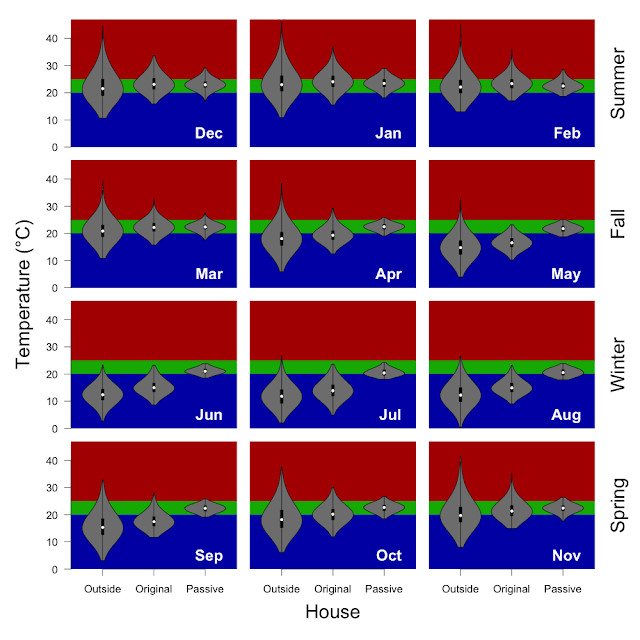
March: Summer was still here until the end of the month. Outside temperatures ranged from 11 to 33 °C (median temperature 21 °C), while inside we were a comfortable 19 to 26 °C (median 23 °C). The HRV was in the cooling season and the split system was mostly on during the days and off during the evenings when the windows were open (evenings were cool enough to open the house at night less than half the month).With the sun mostly out the solar production was solid.
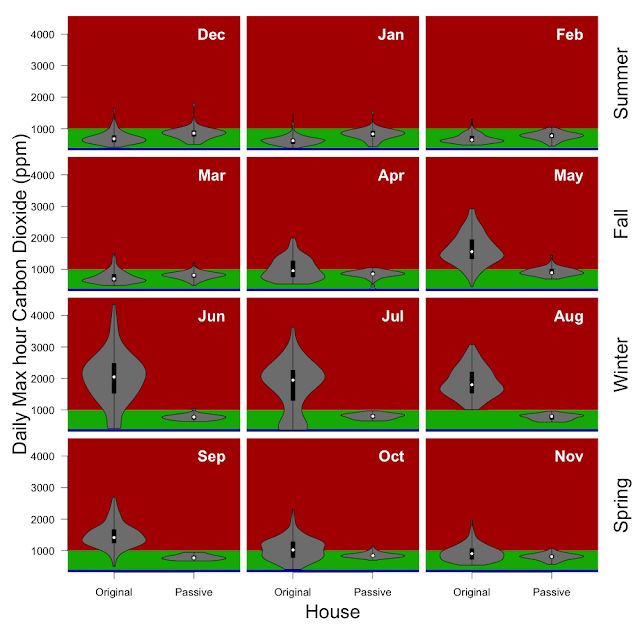
We had about a week with the HRV out of service due to a temperature sensor failure. This results in the exhaust fan working, but the intake fan shutting down. So operationally you tilt open a window at the far end of the house to let air in, the HRV continues to exhaust but no heat recovery happens. FanTech was great and sent out a replacement sensor which I swapped out so the HRV is back up an running. Not ideal, but why the inside temperature ran a bit warmer this month. During this period of time the house CO2 levels stayed below 1000ppm except when the kids closed their bedroom door and the CO2 reached 2500ppm in their bedroom. Values well less than typical in our old house.
Temperature from inside and outside the house as the percentage of hours in 0.5 °C bins. I've scaled the temperature in hope that I will be able to use the temperature range for all months. We have made a decision to keep the house above the WHO recommended 18 °C rather than the passive house standard of 20 °C.

Methods: I have taken the 5 minutely data from the wirelessTag sensors and calculated the median temperature for each hour and determined the proportion of hours falling inside of the 20 - 25 °C target temperature (using the R functions 'aggregate' and 'hist'). Inside includes data from the wirelessTag sensors spread across nearly every room of the house. Outside is the data from the wirelessTag sensors outside near the cubby house. The water wall data are not included.
Energy production and consumption: 1. total daily consumption and solar production, 2. daily net energy production (energy produced - consumed), 3. energy independence (1 - (imported / consumed energy)), and 4. solar offset (energy produced / consumed).

Some notes about the energy plots... Currently the batteries are configured to maximise our cost savings, which means we import / export electricity to avoid imports during the peak demand period. The batteries will also top up from the grid when weather (including fire) warnings are issued to ensure that the batteries are full should the gird power go down.